First-Gen Students Leverage Scholarship for Great Barrier Reef May Term
- Nov 17, 2026
- Education Abroad
- by Lizzie Bassett


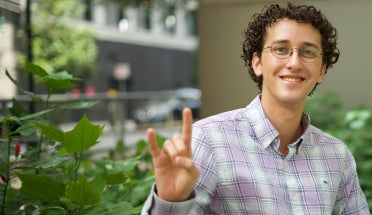
When geography senior Yvonne Jackson began her college career at The University of Texas at Austin, she knew education abroad would be in her future. She remembers searching through the offerings, hoping for something far beyond her comfort zone. That's when she found the opportunity that changed her entire idea of what studying abroad could mean.
In 2026, Jackson experienced northeastern Australia during the May Term, The Politics of Protecting the Great Barrier Reef. During this voyage, students travel to the towns along Australia’s Great Barrier Reef and learn the intricacies behind protecting, studying and advocating for one of the most biodiverse areas of the world’s largest coral reef.
Jackson said the trip was unlike any other international travel she has experienced, as it helped her understand just how big the world is.
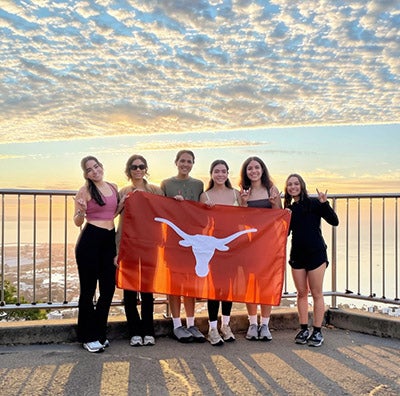
“I was able to expand my knowledge; I saw a different part of the world in a different hemisphere, on a different continent,” Jackson said. “I experienced a new environment different from what I am used to."
Activities on the 23-day trip feature up-close interactions with nature and politics, including a visit to a koala sanctuary, snorkeling in the Great Barrier Reef and talks with members of Queensland Parliament about conservation.
More than 5,000 Longhorns study abroad every year. Experiential learning in global settings helps students acquire hands-on knowledge and gain cultural perspective, amplifying their education and later setting them apart in their careers — tangible benefits augmented by the realizations, understanding and irreplaceable memories education abroad can create.
Funding Puts the World Within Reach
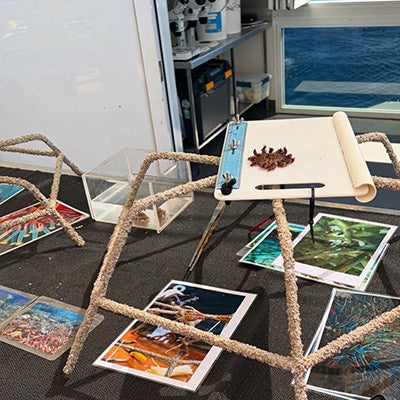
“I knew I was going to see the Great Barrier Reef, but it's totally different to be looking out in the water and seeing so much coral, and then jumping in, seeing all the fish, swimming with the turtles and the sharks,” said Grace Pantazopoulos, a geosystems engineering sophomore who joined the 2026 May Term. “That's just a completely unforgettable experience. And overall, it's just way different — the concept of studying abroad versus actually being there.”
Pantazopoulos and Jackson were part of a select cohort whose members were each awarded a scholarship created by the May Term’s faculty leader and designated for first-generation college students. The funding enabled five students, all from distinct majors with vastly differing goals, to tour Australia with the program.
“I want to make sure that I'm going at every opportunity with as much passion and determination as possible.”
— Grace Pantazopoulos, 2026 Great Barrier Reef May Term
Government Professor Rhonda Evans, a UT alum (Ph.D. '04) and director of UT’s Clark Center for Australian and New Zealand Studies, initiated the May Term course in 2022 after learning how drastically climate change threatens the reef.
Australia’s oceans are jeopardized by a myriad of issues, from ocean acidification (which reduces oxygen and inhibits coral growth) to commercial fishing and urban runoff into waterways. Evans said many participating students don’t realize just how vulnerable the area is until they look directly into the intricacies of policymaking and see for themselves how the issues are managed.
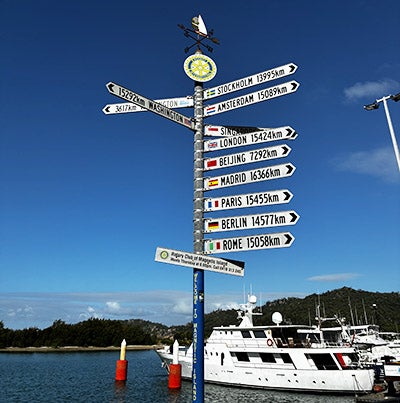
Evans, who was a first-gen student herself, created the scholarship a year after the trip began, when she saw how life-changing it could be to venture outside the country. She also knew the program was among the most expensive May Terms that UT offers and wanted to do what she could to remove the financial barrier for anyone who wanted to go.
The scholarship enabled several students, many of whom had previously never left Texas, to join the May Term. Evans said even if students do not accompany her to Australia, she wants to show them that funding is available for nearly all education abroad options, and the time spent on searching and applying is well worth it.
The University offers a variety of scholarships for study abroad, and students are encouraged to apply for as many as possible. With more than 500 international programs offered through Texas Global and ample funding assistance available, the perceived financial barrier can be significantly reduced for students seeking to go abroad.
“[The scholarship] makes it possible for them to have this experience that they otherwise might not have,” Evans said. "The prospect lets first-gen students maybe think more seriously about applying than they would if it didn't exist.”
Jackson, who received the scholarship for the 2026 trip, said the money made the idea of going abroad feel within reach.
“It made study abroad feel more accessible. I felt truly grateful,” Jackson said. “I think it's a great opportunity, and it also shows the care they have for students.”
Where Classroom Meets Coral Reef
Another of Evans’ goals is to make the May Term, now approaching its sixth iteration, better each year. During the past two years, the group snorkeled in Cairns, where healthier coral lives, located further north than the rest of the destinations.
The snorkeling excursion is often the most life-changing part of the trip for students, Evans said. Once they’re underwater, everything feels real.
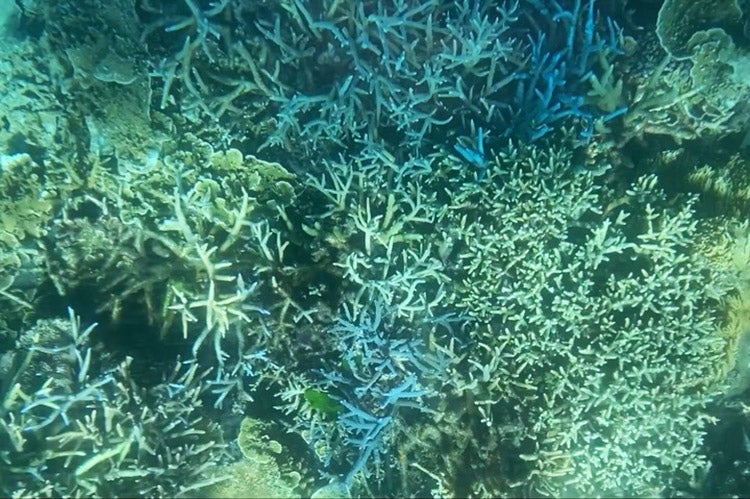
“You can watch all the great documentaries on the reef, but actually being in the water and hearing how noisy it is — that there are so many little critters in the sand and in the coral crevices that you can't see ... and you just happen to have the privilege to be there,” Evans said.
She continued, “Once I get in the water, I'm the last one back in the boat because I just don't want to leave. It feels like such a privilege to experience it fully with all of your senses. I would snorkel every day if I lived there.”
Jackson said the trip helped her surpass her comfort zone, a concept she wrote about in her application essay for the first-gen scholarship. She said the trip also solidified her desire to work or study outside the United States.
“What better way to learn about yourself than to go outside your comfort zone?” Jackson said. “We snorkeled and hiked down a gorge. I feel like that shows that I'm capable of doing more.”
Charting New Waters in Learning
After the program, some students said they have changed what they want to do in their future careers. For Pantazopoulos, the course changed her ideas about how to use her engineering degree for the greater good. She said family members, who immigrated from Greece and Mexico, have also inspired her to do more.
“We can engineer solutions, but it doesn't really matter if we don't have a way to implement them. We need to communicate with the public, with politicians, and really get backing from a community,” Pantazopoulos said. “I hear the stories of my parents and my grandparents and how much they sacrificed, and I want to make sure that I'm going at every opportunity with as much passion and determination as possible.”
Evans said the most important thing about education abroad is to try — to learn what opportunities exist and apply for them. She said students often discover there are more scholarships available than they think.
“When I get on my pulpit and start preaching about study abroad, I tell them there are more ways today to make it fit into your degree program, so don't let that stop you,” Evans said. “Plan. Look for scholarships. There's money out there.”
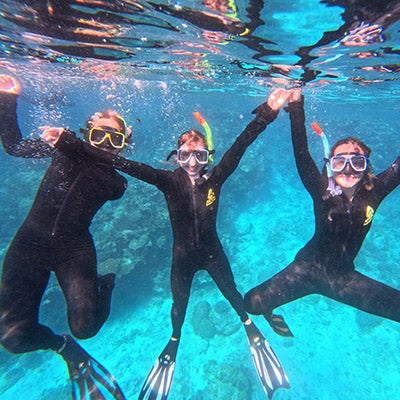
In spring 2027, Great Barrier Reef May Term participants will voyage to Port Douglas for the first time, where they will snorkel and visit the world’s largest collection of hard coral for two full days.
Jackson said she is forever grateful that she was able to travel to such a beautiful country. She urges anyone who’s thinking about learning abroad to apply.
“Things will work out either way, so just apply. Do it!” Jackson said. “You never know what could happen.”
International engagement lies at the heart of UT's mission and is made possible by Education Abroad at Texas Global, with offerings that include faculty-led programs, service learning, internships, research abroad and much more. To learn more about studying abroad, finding the right program, and identifying scholarships and funding assistance, visit the Education Abroad website.