ATX+Singapore Alum Expands Robotics Business Globally
- Oct 22, 2026
- Global Innovation Lab
- by Ellen Stader


When Doozy Robotics co-founder Ajmal Thahseen arrived in Austin in 2023 to participate in the ATX+Singapore Entrepreneurship program, he had no intention to expand his fledgling business from its base in Singapore into the United States. But his experience at The University of Texas at Austin altered that trajectory.
“The next plan was to go into the Middle East,” Thahseen said. “Without the ATX+Singapore program, we had no plan of scaling in the U.S. But now, the number of customers we’ve got, and the amount of traction we’re receiving, it’s really positive.”
Thahseen now spends about one-third of his time in the States, primarily in New York and San Francisco, he said, and more than half of Doozy Robotics’ sales funnel now comes from the U.S.
The transformation illustrates what can happen when universities connect entrepreneurial education with international experience. ATX+Singapore did more than introduce Thahseen to a new market: It helped him understand that market, build relationships within it and recognize that Doozy Robotics could compete on a global stage.
Building an International Launchpad
Launched in 2022 with funding from the U.S. Embassy Singapore’s Small Grants Program, ATX+Singapore was created to support emerging entrepreneurs with training, business insight and exposure to international best practices. The initiative also brought together Texas Global, Enterprise Singapore and the City of Austin Economic Development Department.
With access to numerous worldwide tech innovators headquartered locally, UT Austin provides an ideal launchpad for international startups expanding into the U.S. market. Programs offered by the Global Innovation Lab (GIL) leverage Texas Global’s robust connections in the local and regional entrepreneurial ecosystem as well as expertise in identifying, developing and commercializing high-impact ideas to empower entrepreneurs.
“A charter objective of the Global Innovation Lab is to discover and extend the use of groundbreaking technologies — particularly from emerging startups outside the United States — that stand to improve the productivity and bottom line of U.S. enterprises,” said John O'Neill, program manager at GIL.
“When we first encountered the company, Doozy had already developed its innovative robot technology in Singapore, but GIL then helped equip the company with the skills and contacts necessary to effectively enter the U.S. market.”
The ATX+Singapore curriculum covered market validation, competitive analysis, pitching, marketing and intellectual property protection and other building blocks of growth. Entrepreneurs from 10 Singapore businesses completed Texas Global’s Innovation Readiness® training and received mentoring from business experts in Austin.
For Thahseen, those lessons became a practical framework for international expansion. Doozy Robotics was selected to participate in the March 2023 SXSW Interactive Conference. From this standpoint, Thahseen could test ideas, meet prospective partners and begin developing relationships in the United States.
Regional Startup to Global Contender
When Thahseen first traveled to Austin, Doozy Robotics was based in Singapore with a branch in India. It supplied robots for hospitality, logistics, manufacturing and health care in markets across South and Southeast Asia. The company’s ambition was already expansive.
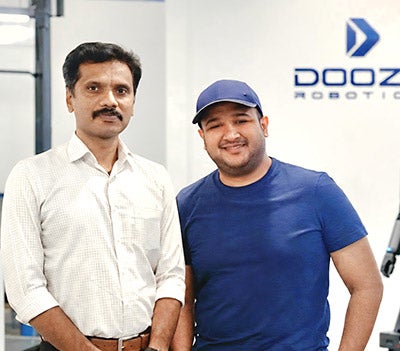
“Our vision is to build robots for every business and household,” Thahseen said in 2023. That vision required Doozy to adapt its products, customer support and prices to the expectations of individual markets. ATX+Singapore helped convert that ambition into a global strategy.
In May 2026, Doozy Robotics announced a coordinated expansion across the United States, Asia and the Gulf Cooperation Council region as it prepared for a planned Series A funding round.
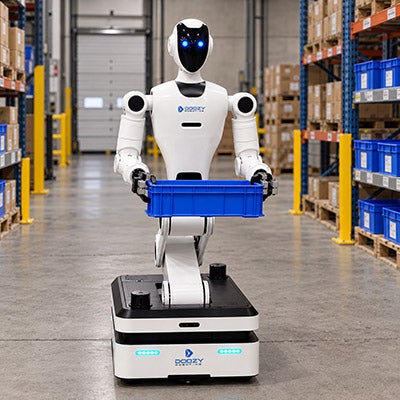
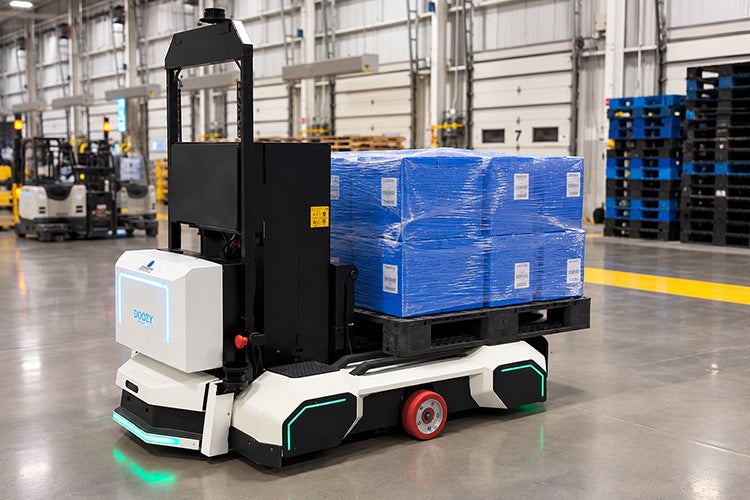
Its industrial humanoid robots perform repetitive assembly-line work in industries such as electronics and pharmaceuticals, while its autonomous mobile robots and vehicles such as driverless forklifts move materials and pallets through factories. The machines operate under proprietary orchestration software designed to function as a super-intelligent factory manager, interpreting production goals, distributing work among robots and adjusting operations when conditions change.
“It’s an end-to-end solution,” said Thahseen. “From material transport to assembly line, we have a fleet of robots that can do different forms of jobs.”
Citing a structural, generational labor shortage that now extends well beyond aging economies, the company is positioning itself as the first scalable, agentic, industrial workforce built to address widespread labor constraints.
"The global labor shortage is a structural shift, not a temporary imbalance," said Suresh Chandrasekar, Doozy CEO and co-founder. "We are building the Physical AI workforce that will power the next era of manufacturing, enabling facilities to operate with intelligence at scale. This expansion into the U.S. marks a critical step toward that vision."
Doozy offers its technology in a “Robot-as-a-Service” subscription model. This approach invites customers to subscribe on a monthly basis instead of purchasing the machines outright, enabling them to adjust the mix of humanoids and robots as production demands shift.
Navigating a Complex Market
Entering the U.S. market has brought opportunity for Doozy, but it has also demanded the adaptability that ATX+Singapore emphasized.
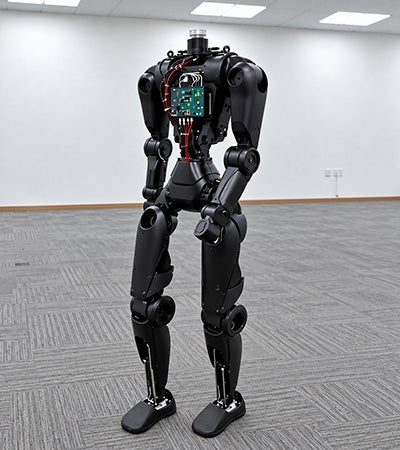
Thahseen said changing U.S. manufacturing requirements disrupted the company’s original plans to ship their first humanoid robots to a blue-chip customer in the States, and tariff fluctuations have posed further challenges. Yet these complications have not diminished the significance of the U.S. market, nor quenched Doozy’s thirst to deliver within it.
Instead, the company maintains a forward-looking perspective on its expansion. Following the close of its upcoming funding round, Doozy plans to establish a manufacturing presence in the U.S., thus shortening the pipeline to the marketplace and cutting out a host of transcontinental complications along the way.
Building on its current assets and knowledge, the firm has doubled down on the value of finding advisers, cultivating partnerships and responding quickly when market conditions shift — precisely the capabilities that ATX+Singapore developed, which will sustain them through market fluctuations.
“I'm flying to New York next week,” said Thahseen. “We have a great pipeline in the U.S. right now. There are a bunch of other customers.”
Redefining What’s Possible
Doozy Robotics now reports engagements involving Daimler, Carrier and VitaQuest, with paying customers on two continents. Its commercial activity includes a qualified global pipeline exceeding $200 million, a $144 million memorandum of understanding with an industrial conglomerate and a humanoid pilot with a U.S. pharmaceutical company.
Those figures signal how far the startup has progressed since Thahseen first came to Austin, and investors have taken notice.
"They have cracked some of the most persistent bottlenecks in industrial robotics, reducing the operational footprint by 50% compared to traditional forklifts,” said Michael Blakey, managing partner at Cocoon Capital, a Singapore-based venture capital investor. “Most importantly, they are delivering this advanced capability at a price point that makes mass-market adoption inevitable. It is a truly impressive leap forward for the industry."
The company still faces the hard work of manufacturing, fundraising and navigating an evolving regulatory environment. But Thahseen is no longer approaching those challenges solely as the leader of a regional robotics firm: Now he’s building a global enterprise.
Without intervention, Doozy Robotics might have easily continued growing across Asia. But with ATX+Singapore, Thahseen acquired the knowledge and connections to blaze an even more ambitious trail — one leading him and his robots to Austin, through the United States and maybe even into the world beyond.