Teacher Feature: Tracy Frank, English Language Center Instructor
- Dec 4, 2025
- English Language Center
- by Ellen Stader


[Editor's Note: This story is part of a Texas Global series celebrating the work of faculty members in the English Language Center at The University of Texas at Austin.]
The English Language Center at The University of Texas at Austin delivers a wealth of dynamic programs for English language learning, combining exceptional instruction with immersive cultural experiences. The center, housed at Texas Global, designs classes to ensure that students thrive in both academic and social settings, and its engaging social activities help learners build confidence, connect with peers and integrate seamlessly into English-speaking environments.
Expertise and breadth of knowledge are what set the ELC apart. More than 20 accomplished faculty members focus an acute attention to detail on every class and student interaction. They personalize instruction, integrate proven methodologies and ethically integrate AI to elevate traditional learning methods — all while honoring each student’s unique cultural, educational and linguistic background.
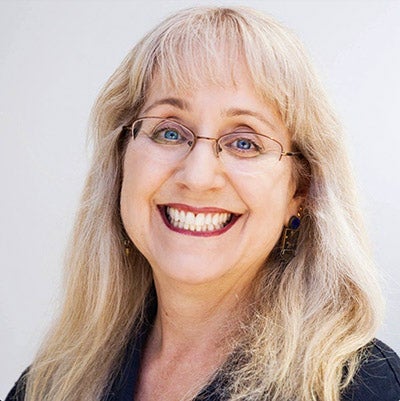
Having taught English as a Second Language (ESL) for more than three decades, instructor Tracy Frank masterfully navigates this balancing act. In 2001, after her hire at UT’s English Language Center, she began teaching reading and writing classes in the intensive English Language Program and Academic English Program and more recently in the Winter International Academy and Global Summer Institute special programs. She also teaches test preparation courses for ESL teacher certification exams.
Frank has lived and taught in Thailand and Japan, and traveled extensively throughout Asia and New Zealand. Her greatest source of satisfaction as an English Language Center instructor is providing her students with the confidence and skills they need in reading, writing and grammar to reach their goals.
Lead us through the early steps of your career journey in teaching ESL.
After changing my major twice, I heeded the advice of a professor who exhorted, "Don't be practical!" and decided to study what I loved, leading to a B.A. in English at Suffolk University in Boston. I went straight on to graduate school at the University of Washington in Seattle [and entered the] M.A. program in Teaching English as a Second Language (TESL).
My experiences in Seattle as a volunteer program coordinator and instructor teaching ESL classes for Southeast Asian refugees led to my first overseas job in Thailand, where I taught ESL classes to children and adults for one year. After that, I applied to the JET Program in Japan, where I lived and taught ESL for two years.
How did you become an ELC instructor, and how long have you taught there?
My first 10 years in Austin, I taught at the Texas Intensive English Program (TIEP). In 2001, former TIEP colleagues at the ELC urged me to apply, and the rest, as they say, is history. I remember that my interview with the director, Mike Smith, seemed more like an orientation than an interview! I was thrilled to get the job.
I've taught mainly reading and writing classes. While I love analyzing and explaining grammar, I think I'd probably be a boring teacher if I had to prioritize accuracy over meaning and communication, the primary focus of reading and writing classes.
What hopes do you have for your work as an instructor at the ELC?
I'm planning to retire from full-time teaching next year, but right now I'm excited to learn as much as I can about using AI in effective and ethical ways in my teaching and likewise teaching students how to use it effectively and ethically in their studies and learning.
What has teaching English taught you?
To over-plan and then go with the flow. The best lessons may be just as much the result of thorough planning as setting aside the lesson plan completely because the priority is always meeting students' needs in the moment, meeting them where they are in the learning process.
What do you wish more people understood about learning a language?
Learning a language requires long-term motivation, a high tolerance for ambiguity as well as imperfection, and a sense of humor.
What has motivated you the most over the years?
When I succeed in inspiring students on their reading and writing journeys, it reaffirms for me that reading and writing are vital human activities and that what I'm teaching matters. Comments like this one keep me inspired: "Actually, I want to say I really appreciate this course which lets me love writing again. Before I took part in this class, I just thought writing is boring and do not need to revise it. I know from Tracy that writing is rewriting."
What do you like most about teaching?
What do you find most difficult?
What an extraordinary job I have! I love meeting new students and watching a group of strangers become a class and form international friendships.
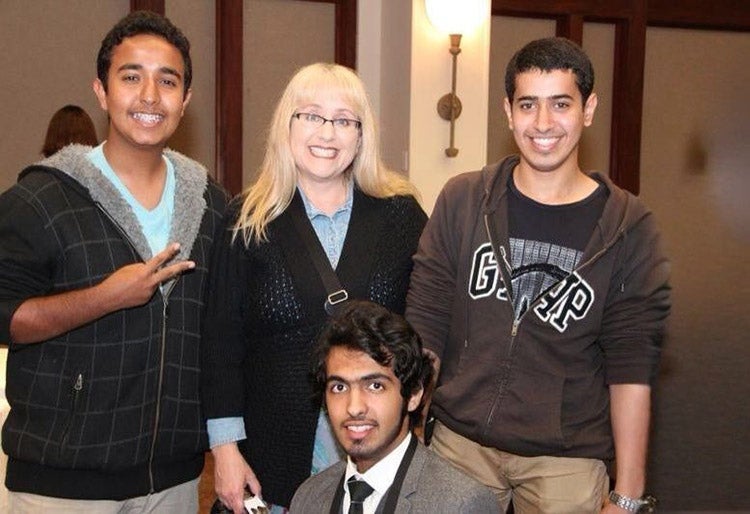
From the students who find their way to my classroom — whether on campus or in Zoom — I have such vivid impressions of places I've never been, which I'd never get any other way. If we all do this right, we leave our assumptions about each other at the door.
I also love collaborating with colleagues and just talking shop. Because teaching requires creativity and problem solving and because you may be teaching the same thing for the 100th time but not the same people, even after all these years, it's never boring.
What's difficult is work-life balance. It's often hard to turn off my teacher brain and put work aside.
What is your best teaching memory?
It's so hard to choose just one! I remember a painfully shy young woman who struggled with reading in English. For independent reading, I selected a book for her about a young teacher who comes of age on the American frontier. She loved it. At the end of the semester, she gave me a card saying, "Because of you, now I love to read." It was a full-circle moment for me because my second-grade teacher had done the same for me — put the right book in my hands at the right time.
This is one of my favorite writing stories: Many years ago, I was flying back to Austin from Mexico City. On the airport shuttle, I ran into a former student I hadn't seen in about five years. Hector had been my writing student in the Academic English Program for prospective graduate students at the ELC and at the time was pursuing his Ph.D. at UT. The first thing he said when he saw me was, "Tracy, I was just thinking about you last week! I was thinking about paragraphs ..."