Architecture Students Propose Designs for Mexico World Heritage Site
- Jan 20, 2026


Nestled in central southern Mexico lies the Tehuacán-Cuicatlán Valley, one of the world’s most remarkable biodiversity hotspots and a landscape deeply connected to the origins of Mesoamerica. Recognized by UNESCO for its outstanding natural and cultural value, the region stretches across southeastern Puebla and northern Oaxaca states and is also celebrated for its extraordinary plant diversity, sophisticated ancient water-management systems and long-held status as a cradle of early agriculture.
In 2025, students from The University of Texas at Austin School of Architecture began developing proposals for the Tehuacán-Cuicatlán Valley World Heritage Site, combining ideas for community-driven programs, such as lodging and a museum, with environmentally sensitive building techniques.
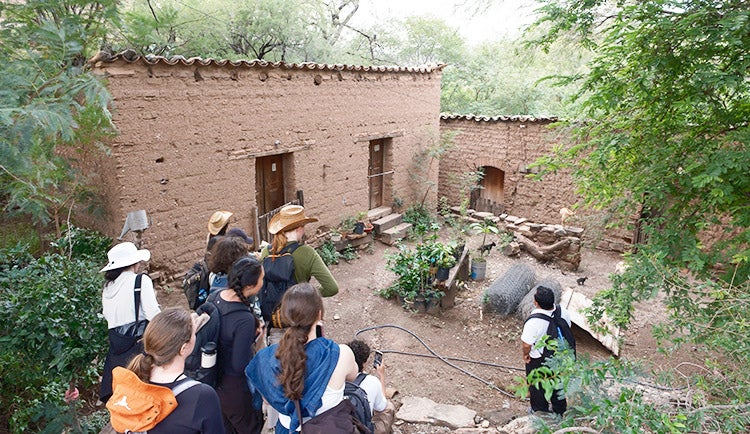
For this initiative guided by associate professor Benjamin Ibarra-Sevilla and funded by the Teresa Lozano Long Institute of Latin American Studies, the students collaborated with several local partners, including the municipality of Santiago Quiotepec, to envision a visitor center that includes a small museum for local archaeological artifacts.
The concept for the visitor center emerged directly from community conversations. Residents expressed a strong desire for a dedicated space to display and protect artifacts connected to the region’s deep history, also inspiring the formation of a local committee to guide the museum’s future.
Another priority was the need for additional lodging. As a World Heritage region, the valley often receives visiting students and researchers, yet accommodations are limited. Most visitors either set up temporary camps or stay in larger towns such as Cuicatlán. In response, the UT students designed a modest, environmentally responsive hotel that relies on local materials and sustainable construction techniques.
At the end of the semester, the students presented design proposals to the community with concepts that reflect architectural exploration and a shared vision for the future of the Tehuacán-Cuicatlán Valley. The hope is that these proposals will serve as catalysts for fundraising, strengthen the community’s long-term planning efforts and offer a roadmap for projects that promote opportunity across the valley.
The project emerged from a partnership with the Fundación para la Reserva de la Biosfera Cuicatlán, A.C., as part of a management plan to establish a regional network of cultural services and heritage-based activities. This initiative seeks to highlight the valley’s cultural and natural value and to envision a comprehensive strategy that leverages the site’s unique features to create meaningful opportunities for sustainable economic development.
For more information, read the original story on the School of Architecture site.